
SmartWeb: How AI-Powered Customer Support Transforms Small Business Operations
Staff-Selected Featured Video
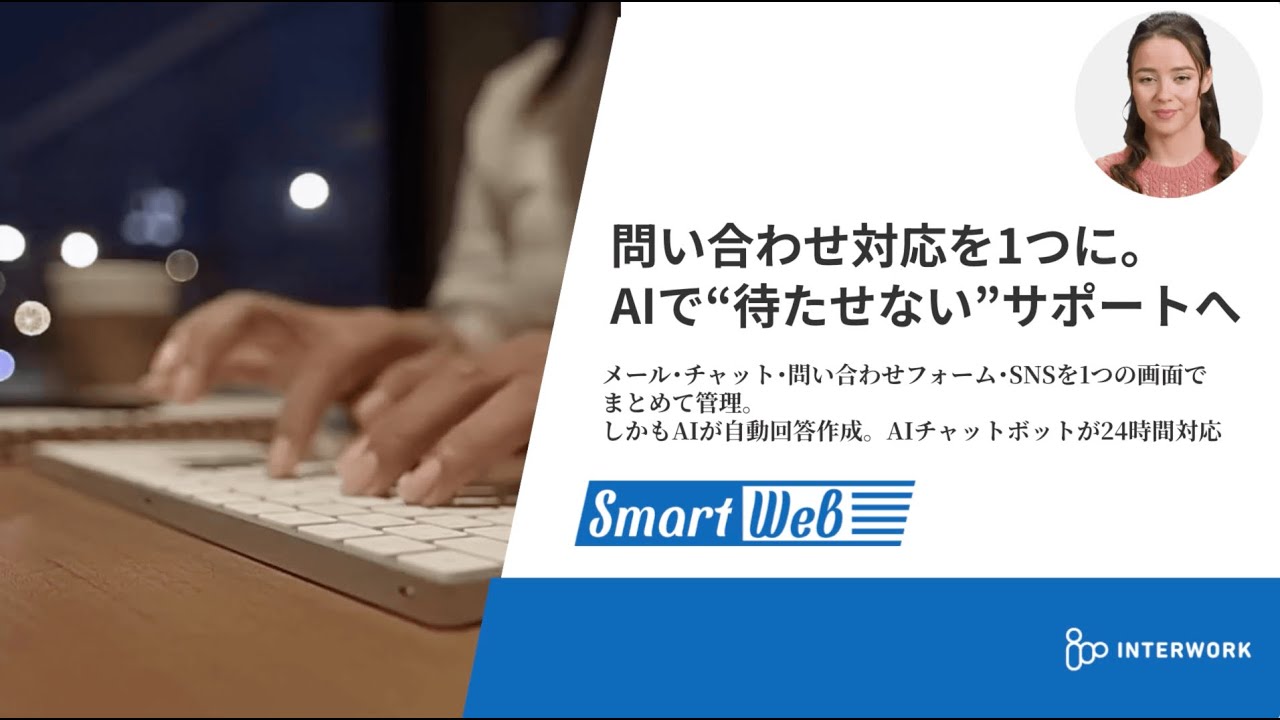
We've created this article based on an excellent YouTube video that our SmartWeb staff felt should be shared with a wider audience. For more details, please watch the original video.
Discover how SmartWeb combines LiveAgent ticket system with FlowHunt AI automation to deliver 24/7 customer support, reduce workload by 82%, and support 100+ languages without requiring IT expertise.
Introduction
In today’s competitive business landscape, customer expectations have fundamentally shifted. Companies are no longer judged solely on product quality—they’re evaluated on their ability to respond quickly, accurately, and consistently across multiple communication channels. For small and medium-sized enterprises (SMEs), this presents a significant challenge. Limited budgets and lean teams make it difficult to provide the 24/7 support that customers increasingly demand. Yet implementing AI solutions often feels overwhelming, requiring specialized technical knowledge and substantial investment. SmartWeb addresses this paradox by delivering enterprise-grade customer support automation that’s both accessible and affordable for businesses of any size. By combining the proven LiveAgent ticket system with FlowHunt’s advanced AI capabilities, SmartWeb enables companies to operate like much larger organizations—without the complexity or cost. This article explores how SmartWeb works, why it matters for modern businesses, and how its integrated approach to customer support automation can transform your operations.
Understanding the Modern Customer Support Challenge
The way customers communicate with businesses has fundamentally changed. Gone are the days when a single email inbox sufficed. Today, inquiries arrive through email, phone calls, social media messages, live chat, contact forms, and messaging apps. Each channel operates independently, creating a fragmented support landscape where critical information gets lost, responses fall through the cracks, and customers experience inconsistent service quality. For businesses without a centralized system, this fragmentation leads to predictable problems: duplicate responses, missed inquiries, unclear ownership of tickets, and frustrated customers waiting for answers that never come. The situation becomes even more complex when team members work remotely or across different time zones. Without visibility into who’s handling what, organizations struggle to maintain service standards and often lose customers simply because their inquiries were overlooked. This challenge is particularly acute for SMEs that lack dedicated IT infrastructure or customer service platforms. They’re caught between two unsustainable options: hire more staff to handle the volume (increasing costs dramatically) or accept that some customers will receive poor service. SmartWeb emerges as a third option—one that leverages AI to multiply the effectiveness of existing teams without proportional cost increases.
Why AI-Powered Customer Support Matters for Business Growth
The business case for AI-powered customer support extends far beyond operational convenience. Research consistently shows that response time directly correlates with customer satisfaction and retention. When customers receive answers within minutes rather than hours or days, they’re significantly more likely to complete purchases, remain loyal, and recommend the company to others. Additionally, 24/7 availability has become a competitive necessity. Customers expect to get answers outside business hours, and companies that fail to meet this expectation lose opportunities to competitors who do. For SMEs, the traditional solution—hiring night shift staff—is economically unfeasible. AI chatbots solve this problem by providing round-the-clock availability without proportional cost increases. Beyond availability, AI improves consistency and accuracy. Human agents, no matter how well-trained, experience fatigue, make mistakes, and apply inconsistent standards. AI systems, by contrast, apply the same logic and knowledge base consistently across every interaction. This consistency builds customer trust and reduces the likelihood of errors that damage brand reputation. Furthermore, AI-generated response drafts dramatically reduce the time agents spend on routine inquiries. Instead of composing responses from scratch, agents review and refine AI-generated suggestions, cutting response time per ticket by 60-70%. This efficiency gain allows small teams to handle significantly higher volumes without burnout or quality degradation. The financial impact is substantial: reduced labor costs, fewer missed sales opportunities, improved customer lifetime value, and enhanced brand reputation all contribute to measurable ROI.
What is a Ticket System and Why It’s Essential for Customer Support
A ticket system is the foundational infrastructure that transforms chaotic customer communication into organized, manageable workflows. At its core, a ticket system consolidates inquiries from all channels—email, chat, phone, social media, contact forms—into a single unified inbox. Each inquiry becomes a “ticket” with a unique identifier, assigned to a specific agent, tracked through resolution, and archived for future reference. Without a ticket system, customer support operates reactively and inefficiently. Inquiries get lost in email threads, responsibility becomes unclear, and there’s no systematic way to track what’s been done or what still needs attention. With a ticket system, every inquiry has a clear status, owner, and history. The benefits are immediate and measurable. First, zero missed inquiries: because all communication flows through one system, nothing falls through the cracks. Second, seamless handoffs: when one agent needs to transfer a ticket to a colleague, the full conversation history is immediately available, eliminating the need to ask customers to repeat information. Third, data-driven insights: ticket systems generate metrics on response times, resolution rates, agent performance, and customer satisfaction, enabling continuous improvement. Fourth, scalability: as your business grows, a ticket system allows you to add agents without proportionally increasing complexity or reducing service quality. Fifth, compliance and documentation: all customer interactions are automatically recorded and archived, supporting regulatory compliance and providing evidence for dispute resolution.
The Five Core Benefits of SmartWeb’s Ticket System
SmartWeb’s implementation of the ticket system, powered by LiveAgent, delivers five transformative benefits that directly address the pain points SMEs face. First, multichannel integration and unified management means that whether a customer emails, calls, messages on social media, or submits a contact form, their inquiry appears in a single dashboard. Agents no longer need to juggle multiple platforms or worry about missing messages on a particular channel. This consolidation alone reduces response time and eliminates the cognitive load of managing fragmented communication. Second, information sharing and improved response quality emerges naturally from centralized management. When a customer has previously interacted with your company, that history is immediately visible to any agent handling their current inquiry. If customer A previously worked with agent B on a specific issue, and customer A now contacts agent C, agent C can instantly see the full context. This eliminates the frustrating customer experience of repeating information or waiting while agents consult with previous handlers. The result is faster resolution and higher customer satisfaction. Third, communication history accumulation and AI learning creates a virtuous cycle. Every interaction—email, chat, phone call—is automatically recorded and stored. This growing repository of real customer interactions becomes the training data for AI systems. Unlike generic AI models trained on internet data, SmartWeb’s AI learns from your actual customer interactions, making it increasingly accurate and relevant over time. Fourth, location-independent flexibility is essential in the modern work environment. Because SmartWeb is cloud-based, agents can respond to customers from anywhere—home, office, coffee shop, or while traveling. This flexibility is particularly valuable for businesses with distributed teams or those supporting customers across multiple time zones. Fifth, workflow automation and optimization handles the repetitive, time-consuming tasks that drain agent productivity. Routine inquiries can be automatically routed to the appropriate department, priority tags can be applied based on keywords or customer status, and templated responses can be automatically suggested. These automations don’t replace human judgment; they eliminate the busywork that prevents agents from focusing on complex, high-value interactions.
How SmartWeb’s AI Chatbot Delivers 24/7 Customer Support
The concept of 24/7 customer support sounds impossible for small businesses—until you understand how AI chatbots work. SmartWeb’s AI chatbot operates on a fundamentally different principle than traditional chatbots. Rather than relying on pre-programmed responses or generic internet data, it uses Retrieval-Augmented Generation (RAG) technology. This approach is analogous to a librarian who doesn’t memorize every book but instead knows how to find the right book when needed. When a customer asks a question, the AI doesn’t generate responses from memory or external internet sources. Instead, it searches your company’s knowledge base—your manuals, FAQs, product documentation, and internal guidelines—retrieves the relevant information, and generates a response based on that specific, accurate information. This architecture provides three critical advantages. First, security and confidentiality: your company’s proprietary information, trade secrets, and internal processes never leave your systems. The AI references your knowledge base but doesn’t store it in external databases or learn from it in ways that could expose sensitive information. Second, accuracy and consistency: responses are always grounded in your official documentation, eliminating the risk of AI hallucinations or providing outdated information. Third, continuous improvement: as you update your knowledge base with new information, the AI immediately incorporates those updates without requiring retraining.
The practical impact is remarkable. A customer contacts your company at 11 PM on a Saturday with a product question. Traditionally, they’d receive an automated “we’re closed” message and have to wait until Monday. With SmartWeb, the AI chatbot responds immediately with an accurate answer based on your product documentation. The customer gets their answer, potentially completes a purchase, and experiences your company as responsive and customer-centric. This capability eliminates the “opportunity cost” of being closed—the lost sales and customer satisfaction that occur when customers can’t reach you outside business hours.
The Five Transformative Effects of SmartWeb’s AI Chatbot
First, 24/7 automatic response capability fundamentally changes customer expectations and satisfaction. Your business never closes. Whether it’s 3 AM on a holiday or during peak business hours, customers receive immediate responses. This availability is particularly valuable for e-commerce businesses, where customers often shop outside traditional business hours and expect instant answers to product questions. The competitive advantage is substantial: customers who get immediate answers are significantly more likely to complete purchases than those who must wait.
Second, complete integration with the ticket system ensures seamless escalation when needed. The AI chatbot doesn’t operate in isolation; it’s fully integrated with SmartWeb’s ticket system. When a customer’s question is too complex for the AI to handle, a single button click transfers the conversation to a human agent. Critically, the customer doesn’t experience this as a handoff—they don’t need to repeat their question or wait for context to be explained. The agent sees the full conversation history and can immediately continue helping. From the customer’s perspective, they’re simply continuing a conversation, unaware whether they’re talking to AI or a human.
Third, automatic email response generation dramatically reduces agent workload. When an email arrives, the AI analyzes the content and automatically generates a response draft based on your knowledge base. The agent reviews this draft, makes any necessary adjustments, and sends it. This process is far faster than composing responses from scratch. For routine inquiries—which typically comprise 60-70% of support volume—the AI-generated draft often requires minimal or no modification. Agents simply review and send. For complex inquiries, the draft provides a starting point that agents can refine. Either way, response time per email drops significantly, allowing small teams to handle much higher volumes.
Fourth, multilingual support without hiring multilingual staff is perhaps the most surprising capability. SmartWeb’s AI, trained in Japanese, can automatically respond in English, Chinese, Spanish, French, German, and approximately 100 other languages. This capability is transformative for businesses with international customers. Rather than hiring multilingual support staff—an expensive and logistically complex undertaking—you can serve global customers with your existing team. The AI handles language translation and cultural adaptation automatically, ensuring responses are appropriate and professional in any language.
Fifth, continuously improving AI represents a fundamental shift in how support systems work. Traditional support systems are static—they provide the same level of service year after year. SmartWeb’s AI improves continuously. As your team handles support tickets, the interactions are recorded and can be added to your knowledge base. Over time, the AI’s understanding of your products, services, and customer needs deepens. The system becomes progressively more capable, handling an increasing percentage of inquiries without human intervention. This improvement happens automatically—you don’t need to retrain the AI or make configuration changes. The more you use SmartWeb, the smarter it becomes.
SmartWeb’s Implementation: No IT Expertise Required
A common concern when considering AI solutions is implementation complexity. Many businesses assume they’ll need to hire consultants, dedicate IT resources, or undergo lengthy setup processes. SmartWeb eliminates this barrier. The service includes professional implementation support from Japanese-speaking staff who handle all technical configuration. They set up your system, integrate your knowledge base, configure your communication channels, and train your team on how to use the platform. You receive a fully operational system ready to use immediately—no technical knowledge required. This approach is particularly valuable for SMEs that lack dedicated IT departments. You don’t need to understand how the AI works or how the system is configured. You simply need to know how to use it, which is as straightforward as using email. This democratization of AI technology is crucial for enabling small businesses to compete with larger enterprises.
The Technology Behind SmartWeb: LiveAgent and FlowHunt
SmartWeb’s power comes from combining two proven, enterprise-grade platforms. LiveAgent is a ticket system used by over 40,000 companies worldwide. It’s a mature, reliable platform with extensive features for managing customer communication across multiple channels. FlowHunt is an advanced AI automation platform that leverages the latest generative AI models—including ChatGPT and Claude—to create intelligent workflows. Both platforms are developed by QualityUnit, a European and US-based IT company with deep expertise in customer support technology. This shared ownership is significant because it ensures perfect integration between the two systems. Updates are coordinated, features work seamlessly together, and the companies have aligned incentives to make the combined solution work exceptionally well. Rather than integrating two separate products from different vendors—which often results in friction and compatibility issues—SmartWeb benefits from the synergy of two products designed to work together.
Real-World Impact: Measurable Results from SmartWeb Implementation
The benefits of SmartWeb aren’t theoretical—they’re quantified in real-world metrics. Companies implementing SmartWeb report 73% faster response times. This improvement comes from multiple sources: AI chatbots answering routine questions instantly, AI-generated email drafts reducing composition time, and ticket system automation eliminating manual routing and prioritization. 82% workload reduction is another commonly reported metric. This doesn’t mean agents work 82% less; rather, they accomplish significantly more with the same effort. An agent who previously spent 8 hours per day composing responses might now spend 2-3 hours, with the AI handling the routine work. This efficiency gain allows small teams to serve much larger customer bases without hiring proportionally more staff. 100+ language support enables businesses to serve global markets without the cost and complexity of hiring multilingual staff. A company with a single support agent can now serve customers in dozens of languages, each receiving responses in their native language. These metrics translate directly to business impact: faster response times improve customer satisfaction and increase conversion rates, reduced workload decreases labor costs and improves agent retention, and multilingual support opens new market opportunities.
Implementing SmartWeb: The Practical Process
Implementing SmartWeb follows a straightforward process designed to minimize disruption and maximize value. First, consultation and assessment: you meet with SmartWeb specialists to discuss your current support processes, communication channels, and customer base. They assess your needs and explain how SmartWeb can address your specific challenges. Second, knowledge base preparation: you compile your product documentation, FAQs, policies, and other information that the AI should reference when responding to customers. This knowledge base is the foundation of AI accuracy—the better your documentation, the better the AI performs. Third, system configuration: SmartWeb’s team configures your ticket system, integrates your communication channels, and sets up the AI chatbot. They ensure everything is connected and working properly. Fourth, training and launch: your team receives training on how to use SmartWeb. This training is straightforward—if you can use email, you can use SmartWeb. Fifth, optimization and improvement: after launch, you monitor performance, gather feedback from your team and customers, and make adjustments. You continuously add to your knowledge base as you encounter new questions or situations. Over time, the system becomes increasingly optimized for your specific business.
Advanced Capabilities: Beyond Basic Support
While SmartWeb excels at handling routine customer inquiries, its capabilities extend into more sophisticated territory. AI Answer Assistant helps agents improve their own writing. If an agent has drafted a response, they can ask the AI to make it more polite, add technical explanations, simplify language, or adjust tone. This feature ensures consistency in communication quality across your entire team. Automatic ticket routing uses AI to analyze incoming inquiries and route them to the most appropriate agent or department. A question about billing automatically goes to the billing department, a technical issue goes to technical support, and so on. This routing happens instantly and automatically, eliminating the manual work of ticket assignment. Priority-based tagging automatically identifies high-priority inquiries—VIP customers, urgent issues, complaints—and flags them for immediate attention. This ensures that critical issues don’t get lost in the volume of routine inquiries. Sentiment analysis detects when a customer is frustrated or angry and flags those tickets for priority handling. An agent can see at a glance which customers are upset and prioritize accordingly.
Addressing Common Concerns About AI in Customer Support
Many business leaders have legitimate concerns about implementing AI in customer-facing roles. “Will AI make mistakes?” Yes, occasionally. But AI makes fewer mistakes than humans, and mistakes are typically less costly than missed inquiries or slow responses. More importantly, SmartWeb’s architecture—using your knowledge base rather than generic AI—dramatically reduces error rates. “Will customers be frustrated talking to AI?” Some customers prefer human interaction, but most are satisfied with AI responses if they’re accurate and helpful. SmartWeb’s seamless escalation to humans means customers who want human support can get it instantly. “Will this eliminate jobs?” SmartWeb doesn’t eliminate support jobs; it transforms them. Rather than spending time on routine inquiries, agents focus on complex issues that require judgment, empathy, and problem-solving. This shift typically increases job satisfaction and reduces burnout. “Is my data secure?” Yes. SmartWeb’s RAG architecture ensures your data never leaves your systems or is used to train external AI models. Your information remains completely private.
The Competitive Advantage of Early Adoption
Businesses that implement SmartWeb gain significant competitive advantages. Speed advantage: faster response times mean customers get answers before they contact competitors. Cost advantage: reduced labor requirements mean lower support costs and higher margins. Quality advantage: consistent, accurate responses improve customer satisfaction and reduce complaints. Scalability advantage: the ability to serve more customers with the same team means you can grow without proportionally increasing costs. Global advantage: multilingual support enables you to serve international markets without the complexity of hiring multilingual staff. These advantages compound over time. A business that implements SmartWeb early gains months or years of experience optimizing the system before competitors catch up. This head start can translate into significant market share gains.
Conclusion
SmartWeb represents a fundamental shift in how small and medium-sized businesses can approach customer support. By combining LiveAgent’s proven ticket system with FlowHunt’s advanced AI capabilities, it delivers enterprise-grade support automation that’s accessible, affordable, and easy to implement. The results are measurable: 73% faster response times, 82% workload reduction, and 24/7 availability in over 100 languages. More importantly, SmartWeb enables small teams to operate like much larger organizations, competing effectively on customer service quality without the proportional cost increases. The technology is no longer the barrier—implementation is straightforward, requiring no IT expertise. The real opportunity lies in recognizing that customer support is no longer a cost center to be minimized but a competitive advantage to be leveraged. Businesses that implement SmartWeb today position themselves to capture market share from competitors still relying on outdated support processes. The question isn’t whether AI will transform customer support—it already is. The question is whether your business will lead that transformation or follow it.
FAQ
Q1. What is SmartWeb and how does it work?
SmartWeb is an AI-powered customer support solution that combines LiveAgent (a ticket system used by 40,000+ companies) with FlowHunt AI automation. It manages inquiries from email, chat, phone, and social media in a single unified inbox, with AI handling 24/7 responses and automatically generating reply drafts for human review.
Q2. Do I need IT expertise to use SmartWeb?
No. SmartWeb requires no specialized IT knowledge. If you can use email, you can use SmartWeb. Japanese support staff handle setup, configuration, and training, delivering a fully operational system ready to use immediately.
Q3. How many languages does SmartWeb support?
SmartWeb supports over 100 languages. AI trained in Japanese automatically responds in English, Chinese, and approximately 100 other languages, eliminating the need to hire multilingual support staff.
Q4. What kind of workload reduction can I expect?
Users leveraging AI through the combination of LiveAgent and FlowHunt experience up to 82% workload reduction and 73% faster response times. The AI handles routine inquiries automatically, generates email response drafts, and manages ticket routing, freeing your team to focus on complex issues.
Q5. Is my company data secure with SmartWeb?
Yes. SmartWeb uses Retrieval-Augmented Generation (RAG) technology, which means your knowledge base and company information are referenced but never stored in external AI databases. Your data remains completely private and secure.
Related Posts

Unlocking AI Chatbot Value: Why Backend Integration & Logs Are Key to Success
The true value of AI chatbots isn't just automated responses—it's the 'backend mechanism' that recor...

2025 AI Customer Support Guide: Success Strategies from Amazon, Salesforce to SMEs
Comprehensive guide to AI customer support trends and success stories. Learn winning strategies in t...

Can AI Really Write Email Responses? Examining Accuracy and Capabilities Through Real Examples
Examining the true capabilities of AI-powered automated response generation through real examples. A...

