
Unlocking AI Chatbot Value: Why Backend Integration & Logs Are Key to Success

The true value of AI chatbots isn't just automated responses—it's the 'backend mechanism' that records, analyzes, and improves customer interactions. Learn why backend integration is crucial and how SmartWeb's LiveAgent integration provides the solution.
In recent years, the move to introduce AI chatbots for customer support has accelerated. AI chatbots are attractive for their ability to handle customer inquiries instantly, 24/7/365. However, their actual value lies not just in automated responses, but in the “backend mechanisms” that record interactions and lead to continuous improvement.
When deciding to introduce a chatbot, many companies focus on “how much can be automated” or “implementation costs.” However, successful companies prioritize operational structures such as backend log management, analysis, and integration with customer information, rather than just the “surface interactions” performed by AI. This mindset is the true key to increasing customer satisfaction and brand value.
Here, we explain how the backend of AI chatbots contributes to improving customer experience and how SmartWeb’s AI chatbot plan realizes this value.
Evolving AI Chatbots and Customer Experience
AI chatbots are not mere Q&A tools. Cutting-edge systems utilize Natural Language Processing (NLP) and machine learning to respond while understanding customer intent. Research shows that this leads to improved customer experience and operational efficiency.
Academic studies indicate that AI-based chatbots significantly improve corporate customer engagement metrics, enhancing response speed and customer satisfaction. Industry surveys report that companies introducing AI chatbots have seen customer satisfaction improve by an average of 15-20% and conversion rates improve by over 20%.
Furthermore, research suggests that high “service quality” in chatbots influences user brand loyalty and revisit intentions, proving that AI chatbots have the power to strengthen relationships with customers.
As these results show, AI chatbots demonstrate business value only when they are continuously improved and operated, rather than being a “set it and forget it” solution.
The Backend of Chatbots: The Importance of Logs and Data
An AI chatbot that simply responds is just an automation tool. The real value is in the “backend mechanisms.” Here, we detail four essential elements for truly leveraging AI chatbots.
1. Accumulating Entire Customer Interactions as Logs
The most basic and important aspect of AI chatbot operation is “log accumulation.” A log is a record of all conversations between customers and the AI. While it may seem mundane, these logs are the raw material for “growing” the AI chatbot.
Why Logs Are Important
Without records, there is no way to improve. For example, even if you feel that “complaints from customers seem to have increased recently,” you cannot confirm if it’s true without logs. What questions are frequent? Where is the AI stumbling? Where are customers dropping off? These insights only become visible by analyzing logs.
Examples of Information to Record
Effective logs include information such as:
- Question Content: What the customer asked (verbatim)
- AI Response Content: What answer was returned
- Resolution Status: Was the customer’s issue resolved?
- Conversation Duration: How many exchanges did it take to resolve (or not resolve)?
- Timestamp: When was the inquiry made?
- Customer Attributes: New customer or repeat customer? (within privacy considerations)
Problems When Logs Are Missing
Companies that do not accumulate logs face problems like this:
An e-commerce site introduced an AI chatbot but did not enable logging. A few months later, they faced a situation where “sales weren’t growing” and “inquiries weren’t decreasing,” but they couldn’t identify the cause. A later investigation revealed that the AI had been providing incorrect information about a “free shipping campaign.” However, because there were no logs, they couldn’t grasp when this problem started or how many customers were affected.
Benefits of Having Logs
On the other hand, companies that properly accumulate logs can utilize them in the following ways:
- Use as AI Training Data: Learning from actual customer phrasing improves response accuracy.
- Foundation for Quality Control: Regular log reviews allow monitoring of AI response quality.
- Trend Analysis: Understand changes in inquiry trends due to seasons or campaigns.
- Compliance: Serve as proof of interactions in case of trouble.
2. Analyzing Chat Content to Grasp Trends
Accumulating logs is not enough. You can only connect them to improvement by analyzing that data. Chat content analysis is a critical step in shifting AI chatbot operation from “passive” to “proactive.”
What Analysis Reveals
Analyzing chat logs brings valuable information to light:
- Frequent Question (FAQ) Patterns: You can see biases like “this question accounts for 30% of the total.” Knowing this allows you to improve the relevant website pages or strengthen the AI’s responses.
- Patterns of Questions AI Couldn’t Answer: Areas where the AI struggles, such as “inventory status” or “individual order status,” become clear.
- Trends by Time and Day: Knowing trends like “inquiries concentrate on Monday mornings” or “return-related queries are frequent late at night” helps in deciding staffing and AI reinforcement points.
- Customer Sentiment Trends: Modern AI can also analyze sentiment. If conversations containing “anger” or “dissatisfaction” are increasing, it may be a sign that something is wrong.
Concrete Examples of Use
A manufacturing company discovered through chat log analysis a sudden spike in questions about “how to install Product A.” Investigation revealed that the QR code for the manual in a recent lot was misprinted. This discovery allowed them to quickly ship corrected manuals, dealing with the issue before it developed into major complaints.
Thus, chat analysis is an important information source that influences not only customer support improvement but also product development, marketing, and quality control.
Opportunity Loss for Companies That Don’t Analyze
Companies that don’t analyze are essentially throwing away valuable data every day. The “raw voice” of what customers are troubled by and what they want disappears without being utilized.
While competitors use the same data to improve services, companies that don’t analyze risk repeating the same problems and inviting customer churn.
3. Seamless Escalation to Human Staff
No matter how excellent an AI chatbot is, it cannot answer every question perfectly. In complex inquiries or cases requiring emotional handling, human staff must take over. What is important here is whether the “escalation (handover)” from AI to human is done smoothly.
Why Smooth Handover Is Important
For customers, the purpose of an inquiry is “to solve a problem.” Whether talking to AI or a human, it’s fine as long as the problem is ultimately resolved. However, if the handover doesn’t go well, customers are forced into the worst experience of having to explain the same thing over and over again.
According to surveys, “having to repeat the same explanation” ranks high among the most stressful customer support experiences. This is largely caused by the handover from AI to human not functioning well.
Example of Bad Escalation
Let’s look at a typical “bad handover” scenario.
Customer: (To AI Chatbot) I want to check the delivery status of order number 12345. It hasn’t arrived past the scheduled date.
AI: I apologize. I will connect you to a representative for details on the delivery status.
(Switches to human operator)
Operator: Thank you for waiting. How can I help you?
Customer: (Explaining from scratch again…) It’s about the delivery status of order number 12345…
In this example, the customer has to explain the same content twice. Even worse, the operator might not even know that the customer had already been interacting with an AI.
Example of Good Escalation
On the other hand, in a properly designed system, the experience looks like this:
Customer: (To AI Chatbot) I want to check the delivery status of order number 12345. It hasn’t arrived past the scheduled date.
AI: I apologize. I will connect you to a representative for details on the delivery status. Please hold for a moment.
(Switches to human operator)
Operator: Thank you for waiting. It’s about the delivery delay for order number 12345, correct? I’ve seen your previous interaction. I’m checking with the delivery carrier right now, so could you wait a little longer?
In this example, the operator already understands the context, so the customer doesn’t need to repeat the explanation. This “small difference” creates a large gap in customer satisfaction.
Impact on Customer Experience
Smooth escalation brings the following effects:
- Reduced Customer Stress: Customers don’t need to repeat explanations, reducing their burden.
- Shortened Resolution Time: Operators can start with an understanding of the situation, shortening the time to resolution.
- Reduced Operator Burden: Having prior information makes it easier for operators to handle the case.
- Improved Corporate Image: Leads to trust that “this company shares information properly.”
4. Staff Can Reference Past Interactions, preventing Customers from Re-explaining
While the aforementioned escalation is about “within a single inquiry,” here we explain the importance of being able to reference the entire past inquiry history from a broader perspective.
Importance of Response to Repeat Customers
In many businesses, a large portion of revenue comes from repeat customers. It is said that the cost of acquiring a new customer is 5 to 25 times that of retaining an existing one. Therefore, conveying the message “we remember you” to repeat customers is extremely important for business.
However, in systems that cannot reference past interactions, even customers with a long relationship have to start from “Nice to meet you” every time.
The Stress of “Starting from Scratch Again”
Think from the customer’s perspective. Suppose you inquired about a product three months ago and explained the situation in detail. If a problem occurs with the same product again, how would you feel if you had to explain from scratch again?
Dissatisfaction arises: “I explained this before…” or “Does this company not remember me?” This goes beyond just being “troublesome” and can lead to the impression that “this company doesn’t value its customers.”
Improved Experience with History Reference
On the other hand, systems that can reference past interactions enable responses like:
- Checking Past Inquiry Content: “I see you inquired about a similar issue three months ago. We handled it with [Solution X] then; is the situation the same this time?”
- Understanding Customer Preferences and Trends: “You requested contact via email previously, so I’ll send the details by email.”
- Proposals Based on Past History: “Considering compatibility with Product A you purchased last time, Product B is recommended.”
If such responses are possible, customers feel “this company understands me,” increasing trust and loyalty.
Contribution to Long-term Customer Relationship Building
Being able to reference past history is not just “convenient.” It becomes the foundation for building long-term relationships with customers.
Just like in human relationships, we feel an affinity for people who remember what we talked about before. The same applies to business. If you grasp the customer’s past inquiries, purchase history, and preferences, and respond based on that, the customer will want to “stick with this company for the long haul.”
This directly connects to improving LTV (Lifetime Value). It leads to long-term business growth by strengthening the entire relationship with the customer, not just streamlining a single inquiry response.
What Happens Without Backend Integration
The four elements explained so far (log accumulation, analysis, escalation, history reference) can only be realized with “backend integration.” Let’s summarize what problems occur if these are missing.
In fact, multiple consumer surveys show that about 40% of consumers who have used AI chatbots answer that “AI support is less reliable than human support.” One reason is cited as ambiguity in AI responses and lack of information consistency.
In AI chatbots without backend integration, the following problems typically occur:
- AI Responses Don’t Improve: No logs means you don’t know what to fix.
- Repeating the Same Mistakes: Without analysis, problems go unnoticed.
- Customers Drop Off: Escalation isn’t smooth, so they give up halfway.
- Repeat Customers Decrease: They get fed up with explaining from scratch every time.
- ROI Is Invisible: No data means you can’t even judge if the AI chatbot is useful.
In short, not just the quality of AI responses, but the mechanism managing the entire flow of support determines customer satisfaction.
The Effect of Backend Integration: The Future Connected by Data
So, what kind of backend mechanisms allow chatbots to demonstrate their true value? The most important point is “being able to centrally manage and analyze past interactions with customers.”
The table below compares “General AI Chatbots” and “AI Chatbots with Backend Functions.”
| Feature / Perspective | General AI Chatbot | Backend Integrated AI Chatbot |
|---|---|---|
| Conversation Log Storage | × | ◎ (All auto-saved) |
| Customer History Reference | × | ◎ (Entire inquiry history visible) |
| Handover to Humans | △ (Manual/Often disjointed) | ◎ (Smooth handover) |
| Customer Satisfaction Analysis | △ | ◎ (Analyzable) |
| Continuous Improvement | △ | ◎ (Improvement via data foundation) |
As you can see, recording and integration raise the quality of customer support as a whole, not just the chatbot. Especially when customer conversations become valuable corporate assets and operations utilizing them become possible, support transforms from mere handling into a strategic asset.
According to the latest market trends, it is generally evaluated that AI chatbots process up to 70-80% of routine interactions, allowing human staff to focus on complex issues. This is said to make both cost reduction and customer experience improvement possible. Gartner predicts that by 2027, about 25% of organizations will use chatbots as their primary customer service channel.
The “Backend Value” Provided by SmartWeb’s AI Chatbot
The “backend value” described so far is realized by SmartWeb’s AI chatbot plan. SmartWeb’s plan centrally manages all customer support logs, not just chat, through integration with LiveAgent, which combines AI chatbot and helpdesk functions.
LiveAgent is an integrated customer support management system that handles inquiries from multiple channels like email, website contact forms, SNS, and phone on a single screen. This accumulates history including not only AI response history but also content handled by human staff. This is not just automation, but a mechanism to build assets that deepen relationships with customers.
With this mechanism, operations like the following become possible:
- Staff can immediately reference past interactions with AI — Customers no longer need to repeat the same explanation.
- Data on questions AI struggles with is accumulated and used as AI training data — Realizing continuous accuracy improvement.
- Customer satisfaction trends are analyzed, revealing chatbot improvement points — Data-driven improvement is possible.
- Customer inquiry trends are visualized and used for service improvement — Contributing to product development and FAQ enrichment.
Thus, SmartWeb’s AI chatbot is not just a tool that answers, but a platform that accumulates data and grows.
Why SmartWeb Is Chosen
Let me introduce specifically why SmartWeb’s AI chatbot plan is chosen by many companies.
1. The Industry’s Only Full LiveAgent Integration
SmartWeb is a service provided by Interwork, the sole distributor of LiveAgent in Japan. Therefore, it is the only solution where the AI chatbot and LiveAgent ticketing system can be centrally managed on the same screen. With other companies’ AI chatbots, you have to switch between separate systems, but with SmartWeb, everything is aggregated into one screen.
2. Handed Over “Ready to Use” Without IT Staff
Many companies want to introduce AI chatbots but lack in-house IT staff. At SmartWeb, professional staff hand it over with all settings completed. We handle everything from training the AI with your materials to installation on the website and initial testing. Anyone who can use email or Word can operate it.
3. Transparent Pricing
A clear pricing structure starting from 200,000 JPY initial cost and 20,000 JPY monthly (excluding tax). We clarify expected usage in advance estimates so there are no “costs kept increasing after implementation” surprises.
4. Supports About 100 Languages
AI trained in Japanese will automatically answer in English if asked in English, and in Chinese if asked in Chinese. No additional translation fees or hiring of multilingual staff is required. It is also ideal for inbound support and companies eyeing overseas expansion.
Summary: AI Chatbots Are Completed in the Backend
AI chatbots have limited value if they only automate and respond instantly. Only when there is a mechanism to record, analyze, and connect customer interactions to improvement does it lead to enhanced customer experience and business growth.
Summarizing the four elements explained in this article:
- Log Accumulation — Record all conversations and create a foundation for improvement.
- Data Analysis — Grasp trends and perform proactive improvements.
- Seamless Escalation — Protect customer experience through AI-human collaboration.
- History Reference — Build long-term customer relationships.
To realize all of these, integration with backend systems is essential, not just the AI chatbot alone.
SmartWeb’s AI chatbot is designed to realize these backend values, managing AI and human support integrally to be a solution that strengthens customer engagement and enhances corporate competitiveness.
For those considering AI chatbot implementation, we recommend evaluating not just the “surface response functions” but also the “backend operational structure.”
Consultation on AI Chatbot Implementation
With SmartWeb, you can introduce a LiveAgent-integrated AI chatbot starting from 200,000 JPY initial cost and 20,000 JPY monthly. Why not build a comprehensive support structure that includes backend operations?
References
- “Effectiveness of Using AI-Based Chatbots in Increasing Customer Engagement,” ResearchHub, 2025.
- M. F. Shahzad et al., “Assessing the impact of AI-chatbot service quality on user e-brand loyalty,” Journal of Retailing and Consumer Services, 2024.
- “Revolutionizing Customer Support with AI Chatbots,” SuperAGI, 2025.
- “AI Chatbot Statistics 2025,” Fullview, 2025.
- “Chatbot Statistics 2025,” Zoho SalesIQ, 2025.
- SmartWeb – AI Chatbot Plan
Related Posts
SmartWeb: How AI-Powered Customer Support Transforms Small Business Operations
Discover how SmartWeb combines LiveAgent ticket system with FlowHunt AI automation to deliver 24/7 c...
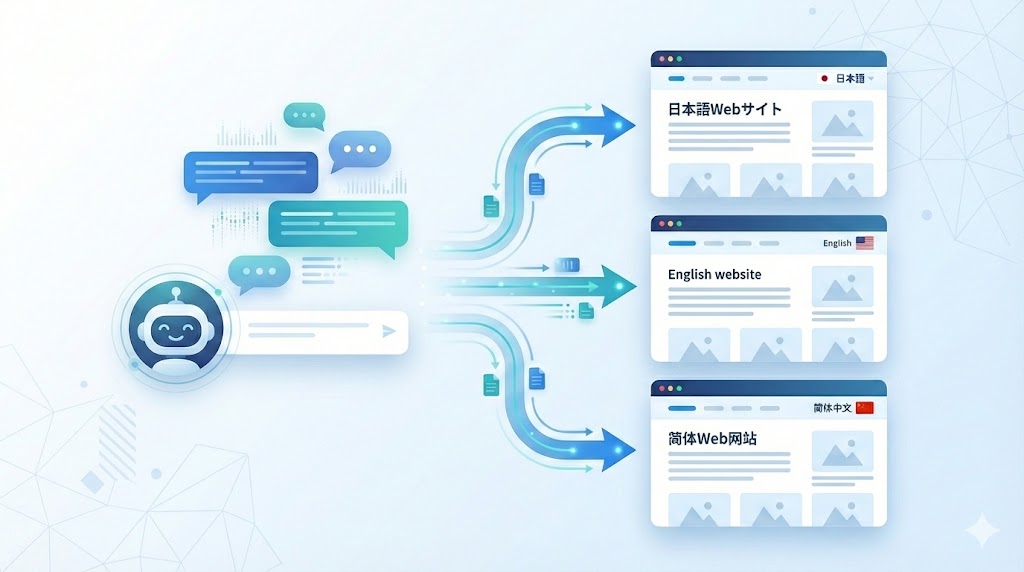
Beyond Accuracy: Why AI Chatbots Need Integrated Website Design
To maximize AI chatbot ROI, website integration is just as critical as response accuracy. We explain...

2025 AI Customer Support Guide: Success Strategies from Amazon, Salesforce to SMEs
Comprehensive guide to AI customer support trends and success stories. Learn winning strategies in t...

